
There are moments in life when you pause, look back, and realise just how far you have come.
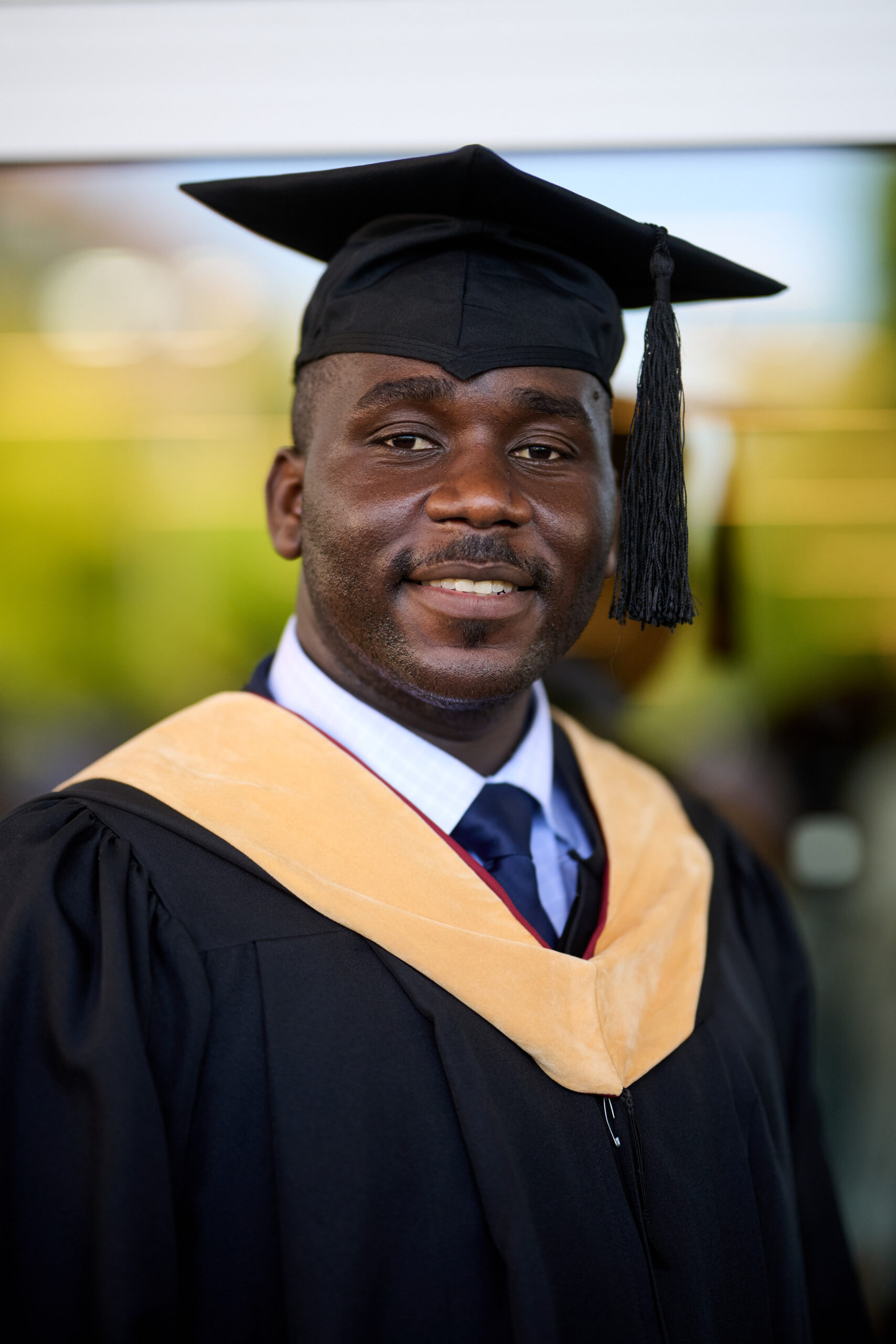
Graduating from the Erasmus Mundus Joint Master’s Degree in Environmental Sciences, Policy and Management (MESPOM) is one of those moments for me. What started as an ambition to study abroad became a two-year journey of learning, growth, uncertainty, friendships, travel, and transformation. I had the opportunity to study across four countries—Austria, Greece, England and Sweden—and to learn alongside people from different countries, cultures and professional backgrounds. I also had the privilege of graduating with distinction. But for me, this graduation represents much more than an academic achievement.
It started with rejection
Winning the Erasmus Mundus scholarship may look like a straightforward success story when viewed from the outside. It was not. Before receiving the scholarship, there were applications that did not work out, opportunities I was not selected for and moments when I had to question whether I was doing enough.
But I kept going.
With every rejection, I tried to understand what I could improve. I strengthened my academic and professional profile, gained new experiences, improved my applications and continued applying.
Eventually, one of those applications changed the direction of my life. I was selected for the Erasmus Mundus scholarship, giving me the opportunity to pursue a master’s degree in Europe.
Looking back, I realise that the scholarship was not simply a reward for submitting an application. It was also evidence of the hard work, persistence and commitment I had invested in developing myself over time.
Four countries, one transformative journey
One of the most remarkable parts of the Erasmus Mundus experience was the opportunity to study in different countries.
I studied in Austria, Greece, England and Sweden, and each location gave me a different perspective.
Moving between countries meant constantly adapting—to new academic systems, cultures, environments and people. It pushed me beyond what was familiar and taught me lessons that could never have been learned from a classroom alone.
Academically, I was exposed to different approaches to environmental science, policy and management. I learned to look at environmental challenges from multiple perspectives and to understand that solving complex problems requires more than technical knowledge.
Personally, the experience changed me too.
Living and studying in different countries made me more independent, adaptable and open-minded. It challenged some of my assumptions and gave me a deeper appreciation for how differently people can see the same problem.
Most importantly, it helped me understand that learning does not stop at the boundaries of a university.
The people were as important as the degree
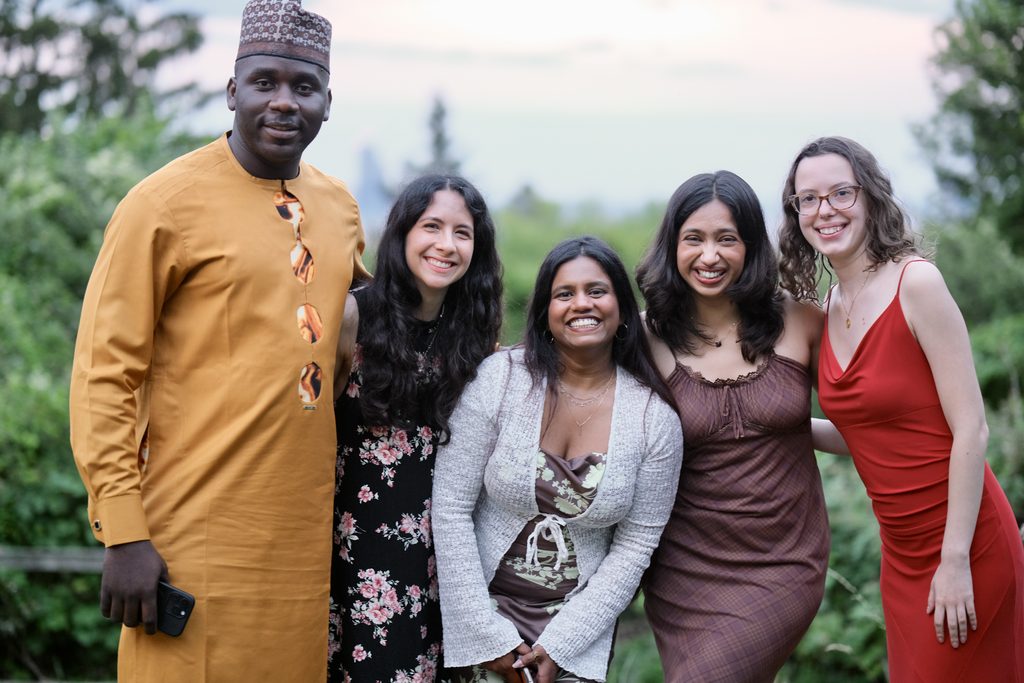
One of the greatest gifts of the Erasmus Mundus experience was the people I met.
I made friends and built professional relationships with people from different parts of the world. We came from different cultures and backgrounds, but we shared classrooms, projects, challenges, meals, travels and countless conversations.
Some of these people became more than classmates. They became friends and members of a global network that I know will continue long after graduation.
These relationships reminded me that international education is not only about earning a degree. It is also about building bridges between people and creating connections that can lead to future collaborations, ideas and opportunities.
More than a master’s degree
When I started the programme, I wanted to gain an international education and deepen my knowledge of environmental issues.
I achieved that, but I gained much more.
The experience transformed the way I think, work and relate with people. It exposed me to new ideas, strengthened my professional confidence and gave me a broader understanding of the environmental challenges facing our world.
It also helped me appreciate the responsibility that comes with receiving such an opportunity.
I know there are many young people who have the ability and ambition to study abroad but may not know where to start. Some may believe that international scholarships are only for people with extraordinary backgrounds. Others may have experienced several rejections and are beginning to doubt themselves.
My journey is a reminder that rejection does not have to be the end of the story.
Sometimes, it is simply part of the preparation.
To anyone dreaming of studying abroad
If you are a young person considering applying for an international scholarship, I encourage you to take the opportunity seriously.
Do not wait until you feel completely ready.
Start where you are. Understand the requirements. Build your profile. Learn from people who have gone before you. Improve your applications. Apply, learn from rejection and apply again.
Winning a scholarship can open the door to a degree, but the experience can give you so much more: exposure to new cultures, lifelong friendships, professional networks, new perspectives and the confidence to pursue bigger opportunities.
For me, Erasmus Mundus was not just about studying in Europe.
It was a journey of personal and professional transformation.
And today, as I celebrate graduating with distinction, I am grateful not only for the degree I earned, but for the person I became along the way.
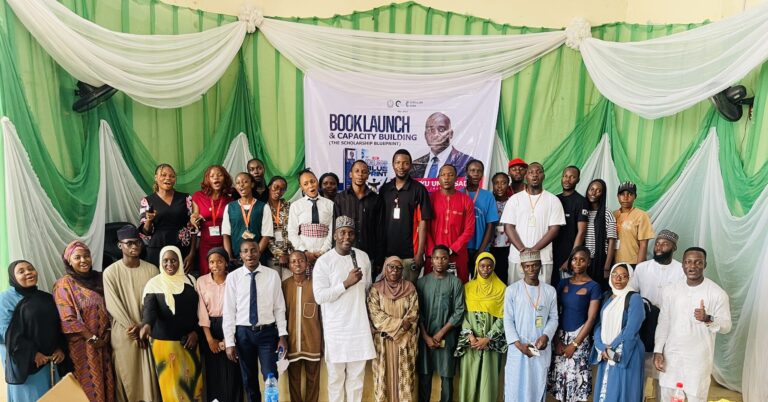
I documented the journey
My experience has also made me passionate about helping other young people navigate the scholarship journey.
Over time, I received many questions about how I found scholarship opportunities, prepared my applications, dealt with rejection and eventually secured fully funded opportunities to study abroad.
So I decided to document what I have learned in my book, The Scholarship Blueprint.
The book brings together my experiences, lessons and practical guidance for young people who want to pursue fully funded international study opportunities.
If you are in Nigeria and interested in getting a copy, you can order The Scholarship Blueprint here
For readers outside Nigeria, the book will soon be available on Amazon.
My Erasmus Mundus journey has come to an end, but I see this graduation not as the conclusion of the journey, but as another beginning.
If my story can encourage one young person to keep applying after a rejection, improve their profile, pursue a scholarship and eventually experience the transformation that comes with international education, then sharing this journey will be worthwhile.